7 min read
S&P 500 slips after a hot CPI
The 10-year Treasury yield hit 5.35% on October 7, its highest since 2002, and jumped back to about 5.3% after Wednesday’s CPI showed annual inflation at 3.7% against a 3.6% forecast. Yields eased to about 5.1% by Friday, but stocks did not follow. The S&P 500 lost 2.0% on the week, while the Nasdaq fell 4.5% as the AI-linked selloff deepened. The Philadelphia Semiconductor Index posted eight straight losing sessions, its longest streak since 2008. CME FedWatch puts the odds of a December rate hike near 89%.
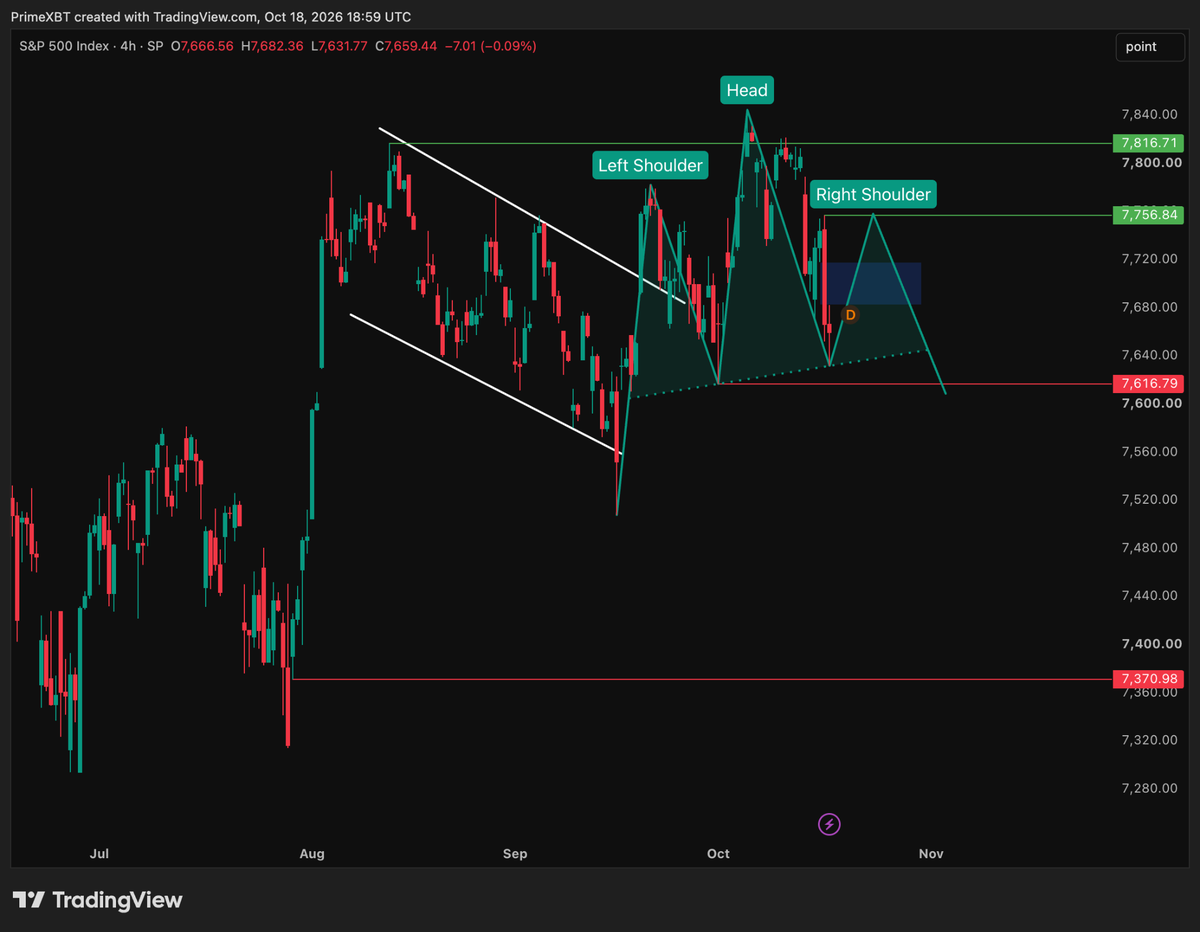
On the 4h chart, the S&P 500 closed the week at 7,659 and is building a potential head and shoulders. The head formed near 7,845 in early October. The neckline sits at 7,616.79. A 4h close below it opens the path toward 7,500 and then the August low area at 7,370.98. A move back above 7,756.84 would cancel the right shoulder and put 7,816.71 back in play.
WTI crude tops $100
Oil was the standout move of the week. WTI November futures settled at $101.41 on Friday, up 10.4% on the week, and Brent touched $110, its highest since May. Iranian attacks on shipping cut flows through the Strait of Hormuz and a Ukrainian strike shut a primary unit at Russia’s Ryazan refinery. US crude stocks fell 8.6 million barrels to 415.6 million. IEA emergency releases of more than 20 million barrels did not stop the rally.
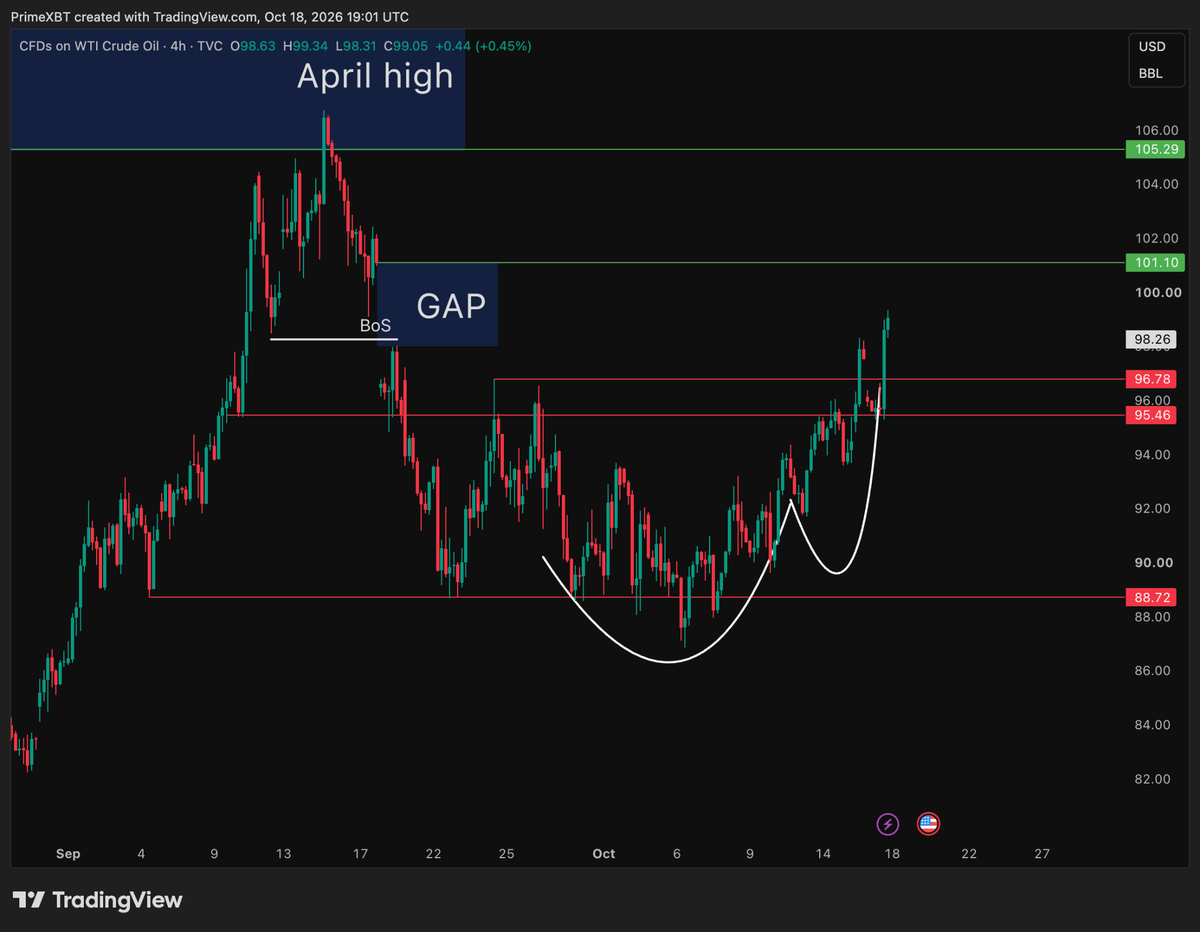
On the 4h chart, WTI crude completed a cup and handle after bottoming near $87 on October 6. Price broke through 95.46 and 96.78, now support, and trades near $99 on the CFD. The gap up to 101.10 is the first resistance, followed by the April high marked at 105.29. If supply risks in the Gulf escalate further, a break of 101.10 opens the path toward 105.29. A return below 95.46 would weaken the pattern.
Canada CPI (Monday)
Statistics Canada releases September CPI on Monday, October 19, at 12:30 GMT. August inflation held at 3.0% y/y, with prices down 0.1% m/m before seasonal adjustment. TD expects +0.2% m/m and 3.2% y/y, while RBC sees the rate holding near 3%. The Bank of Canada has kept its rate at 2.25% since October 2025, but September payrolls fell 68,000 and unemployment rose to 6.5%, which makes the October 28 decision live. A hotter print would lower the odds of a cut and support the Canadian dollar.
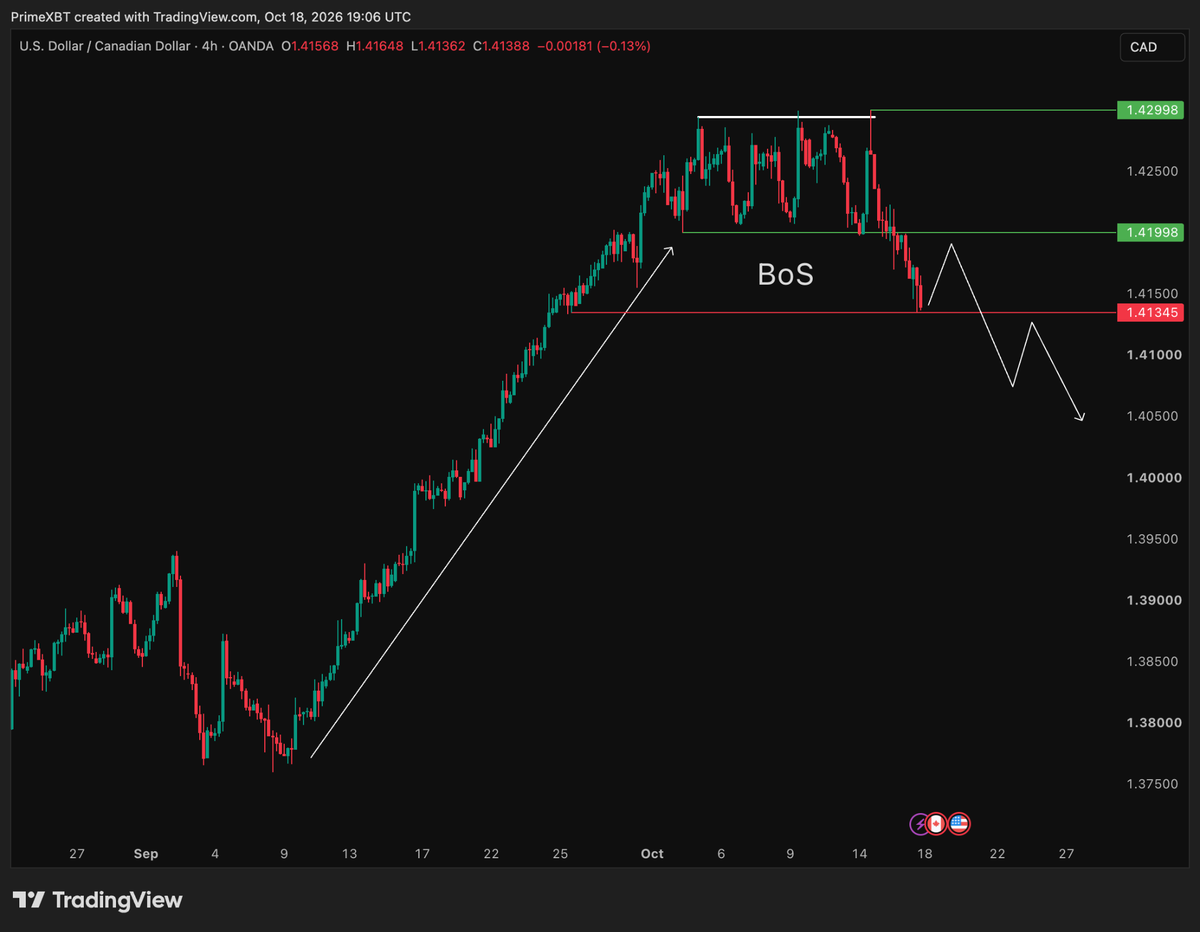
On the 4h chart, USD/CAD swept liquidity above the October range at 1.42998 and then broke structure lower through 1.41998. Price now tests support at 1.41345. If a pullback toward 1.41998 is rejected, it opens the path toward 1.4050. A 4h close back above 1.41998 would cancel the bearish structure.
UK CPI (Wednesday)
The ONS publishes September CPI on Wednesday, October 21, at 06:00 GMT. August inflation rose to 3.1% y/y and 0.5% m/m, driven by motor fuels, while core held at 2.6%. The consensus points to 3.4%. The Bank of England held Bank Rate at 3.75% in September in a 6-3 vote, with three members backing a hike. A print at or above consensus would firm up expectations for a November hike and support sterling.
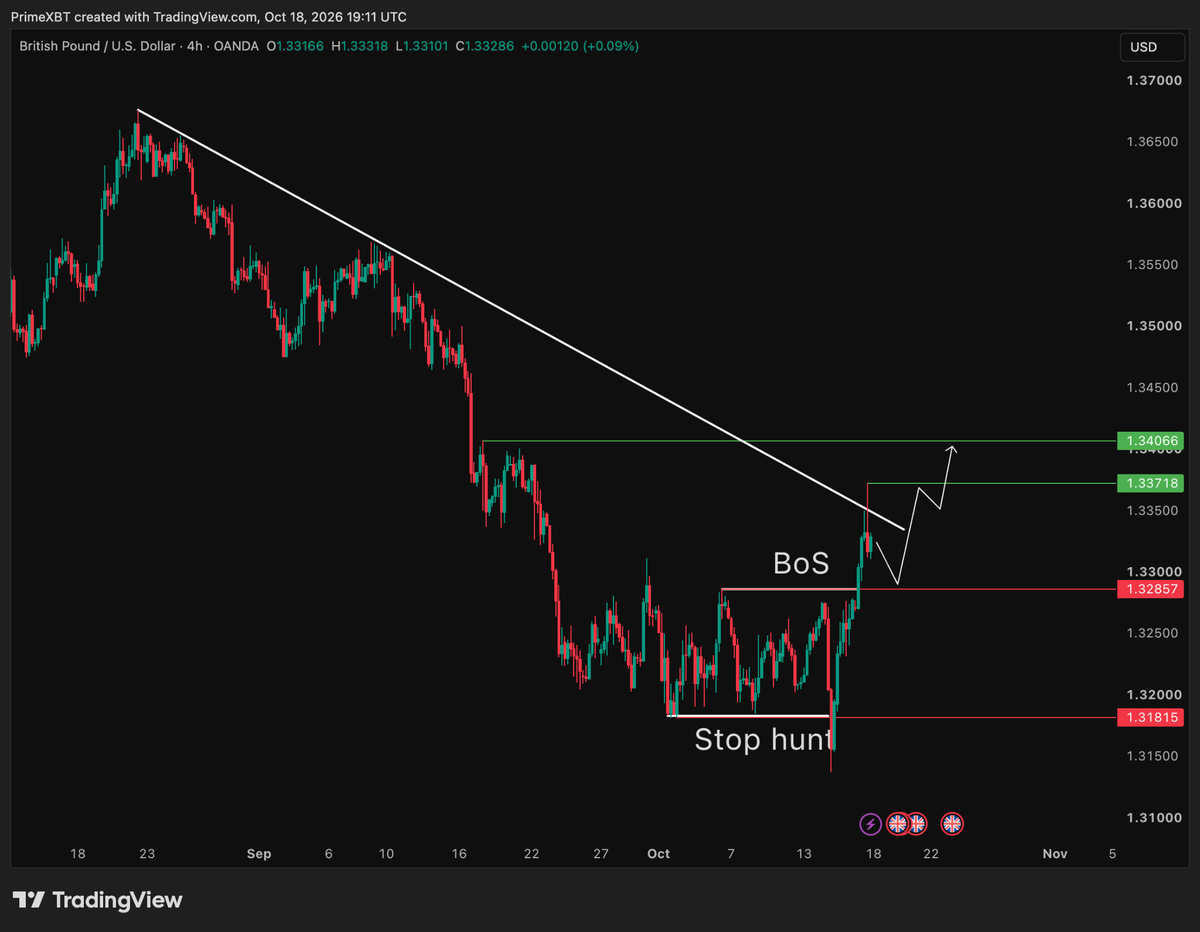
On the 4h chart, GBP/USD ran stops below 1.31815 in mid-October, then broke structure above 1.32857. Price is now testing the descending trendline from the August high. A break above it opens the path toward 1.33718 and 1.34066. A 4h close back below 1.32857 would point to renewed weakness.
New Zealand CPI (Wednesday)
Stats NZ releases third-quarter CPI on Wednesday, October 21, at 21:45 GMT, Thursday morning in Wellington. Annual inflation reached 4.1% in the second quarter, the highest since late 2023. Forecasts for the third quarter range from 3.7% at Westpac to 4.0% at Kiwibank, with the RBNZ at 3.9%. The OCR stands at 2.75% after a September hike. A print above 4% would strengthen the case for a hike on October 28.
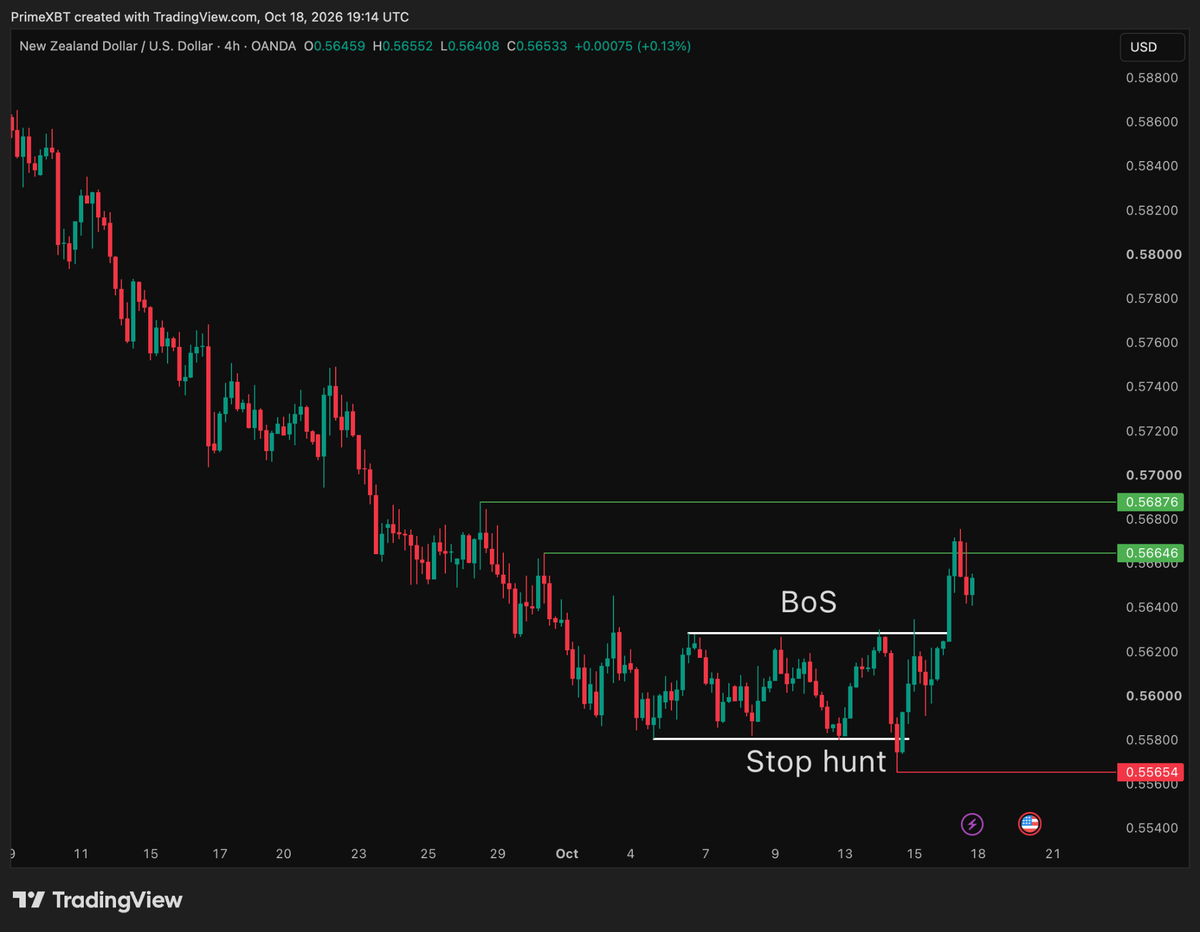
On the 4h chart, NZD/USD repeats the sterling setup. Price ran stops below the 0.5580 range low to 0.55654 on October 14, then broke structure above 0.5628 and reached 0.5674, an 11-day high. Holding above 0.5628 keeps the path open toward 0.56646 and 0.56876. A return below 0.5628 would weaken the breakout.
US flash PMIs (Friday)
S&P Global releases flash October PMIs on Friday, October 23, at 13:45 GMT. In September the flash composite jumped to 58.4 from 56.0, with manufacturing at 57.0 and services at 58.7, all well above forecasts. Another strong reading would support the December hike case and the dollar. A pullback would ease rate pressure.
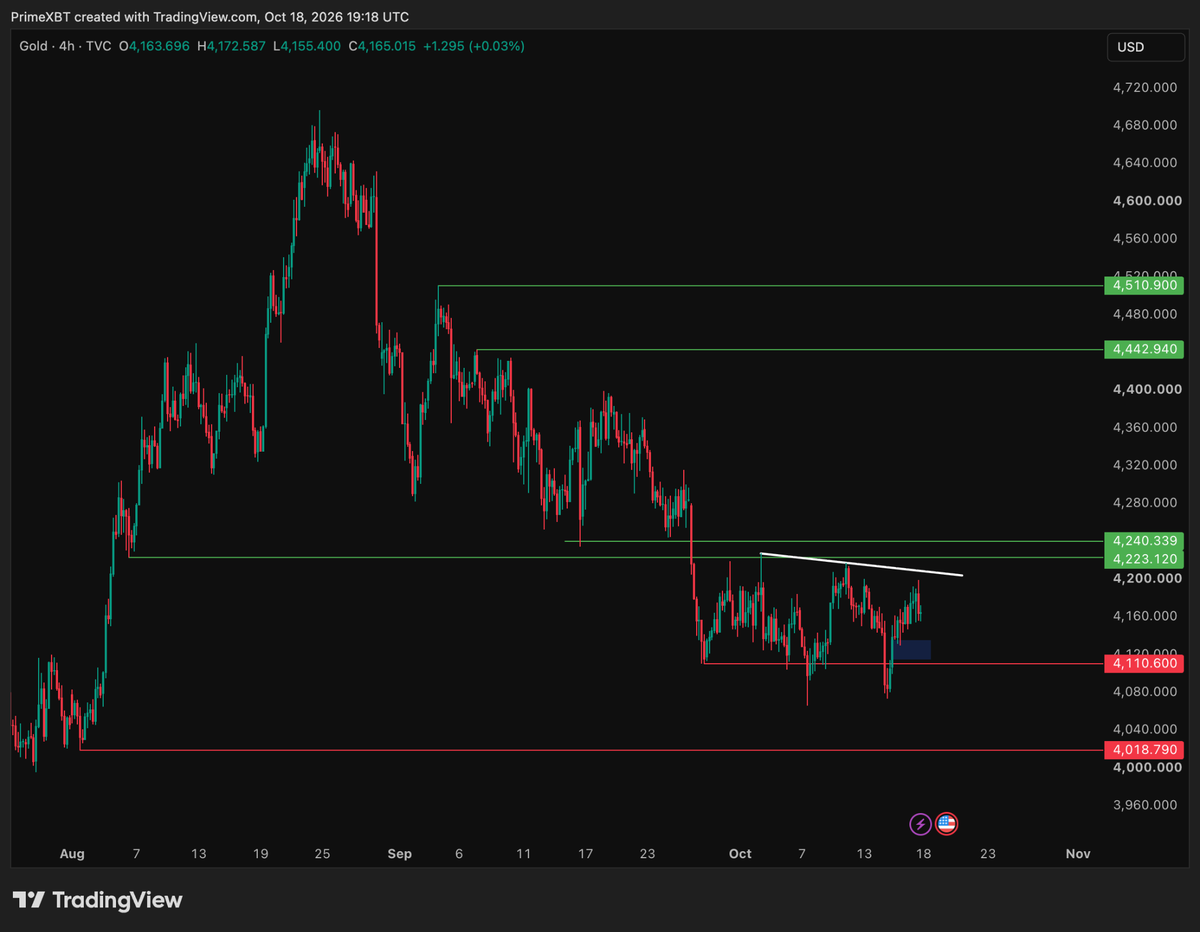
On the 4h chart, gold has ranged between 4,110.60 and about 4,215 since the late-September drop. CPI day pushed it to about 4,075, and the week closed near 4,167, down 0.5%. A break above the descending trendline near 4,205 and then 4,240.34 opens the path toward 4,442.94, and a softer dollar would add support. Hawkish Fed comments remain the main risk, and a loss of 4,110.60 opens 4,018.79.
Bottom line
Inflation data runs the week. Canada, the UK and New Zealand all report CPI ahead of central bank meetings on October 28 and early November, and each print can move its currency on rate expectations. In the US, the flash PMIs test the December hike case, while oil above $100 keeps the energy shock in every print. If WTI holds above 96.78, headline inflation risks stay tilted higher across all four economies.
Trading involves risk.
Author



 Risk Disclaimer
The content provided here is for informational purposes only. It is not intended as personal investment advice and does not constitute a solicitation or invitation to engage in any financial transactions, investments, or related activities. Past performance is not a reliable indicator of future results.
The financial products offered by the Company are complex and come with a high risk of losing money rapidly due to leverage. These products may not be suitable for all investors. Before engaging, you should consider whether you understand how these leveraged products work and whether you can afford the high risk of losing your money.
The Company does not accept clients from the Restricted Jurisdictions as indicated in our website/ T&C. Some services or products may not be available in your jurisdiction.
The applicable legal entity and its respective products and services depend on the client’s country of residence and the entity with which the client has established a contractual relationship during registration.